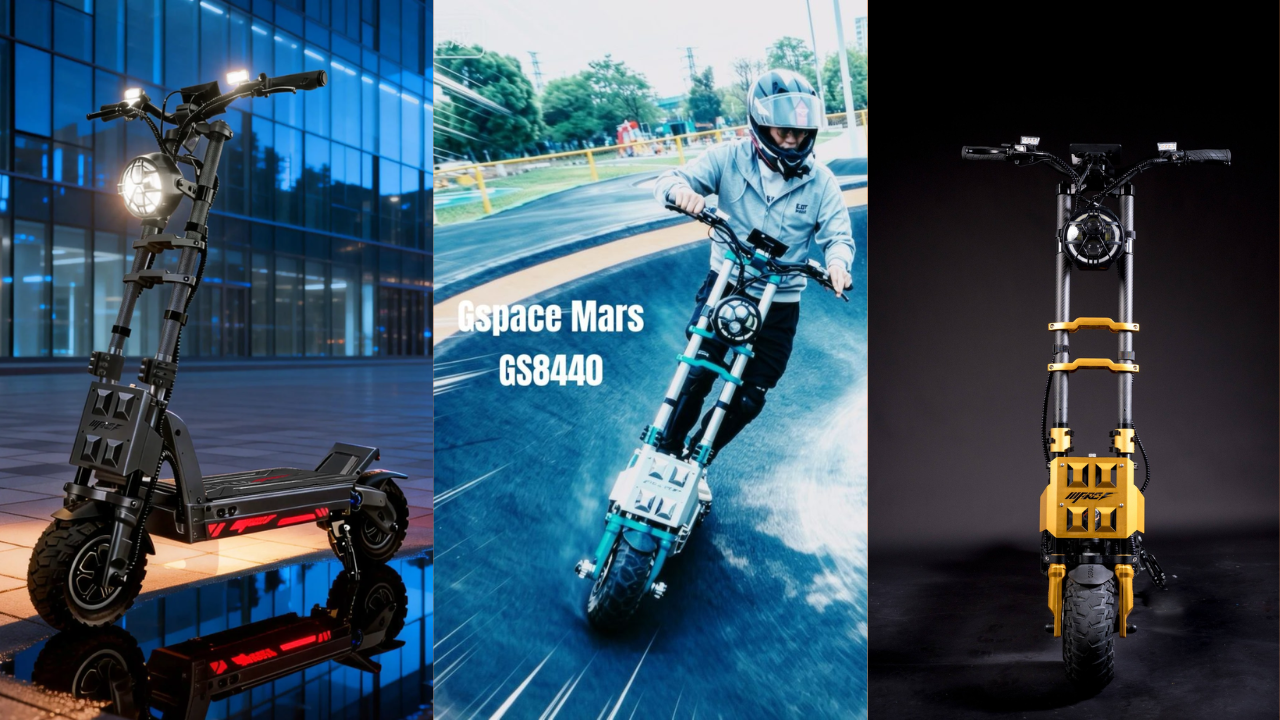
I’ve spent serious time on both of these machines, not just reading spec sheets, but riding them through real-world conditions: urban traffic, wet roads, gravel paths, and open stretches where the throttle tempts you into decisions you should probably think twice about.
The GSPACE Mars GS lineup launched with a clear internal logic. Rather than releasing two similar scooters with minor spec bumps, GSPACE built two machines around fundamentally different priorities: one optimized for raw power and acceleration, the other engineered to cover maximum ground per charge.
Understanding that philosophy is the starting point for understanding the version that belongs in your life.
Table of Contents
What the Names Actually Mean: Decoding GS 8440 and GS 7660
Before anything else, let’s address something that sets the Mars GS series apart from most of the competition: the model numbers are not arbitrary.
GSPACE uses a naming convention that encodes the battery specification directly into the scooter’s name. Once you know the key, you can read exactly what you’re buying without opening a spec sheet.
Mars GS 8440: The Battery Decoded
- “84” → 84-volt battery system
- “40” → 40Ah capacity
- Combined: 84V × 40Ah = 3,360 Wh of energy storage
- Peak power system output: 8,440W (which also mirrors the model number — a deliberate double meaning)
GS 7660: The Battery Decoded
- “76” → 76-volt battery system
- “60” → 60Ah capacity
- Combined: 76V × 60Ah = 4,560 Wh of energy storage
The contrast tells you almost everything about GSPACE’s intent. The GS 8440 runs at higher voltage, which means more aggressive power delivery and higher top-end performance. The GS 7660 compensates with 50% more amp-hour capacity, giving it a significantly larger energy reserve to draw from over long distances.
Higher voltage = faster, more immediate power. Higher amp-hours = more total energy, more range. These two scooters are built around opposite ends of that trade-off, and GSPACE made sure the name tells you which is which.
Quick Update: Use ERC100 while buying any Gspace electric scooter and save $100.
Positioning in the Mars GS Lineup
| Model | Variant Label | Philosophy |
|---|---|---|
| GS 8440 | POWER+ | Maximum acceleration, high-speed performance |
| GS 7660 | RANGE+ | Long-haul capability, intelligent efficiency |
The POWER+ and RANGE+ designations are not just marketing language. They reflect genuinely different tuning decisions across the motor configuration, battery chemistry, riding mode behavior, and the kind of rider each scooter was designed for.
What They Share: The Mars GS Foundation
Despite their different orientations, the GS 8440 and GS 7660 are built on the same platform. Understanding the shared DNA helps clarify that you’re not choosing between a good scooter and a great one, you’re choosing between two different missions.
Both models feature:
- T300 Carbon Fiber Composite Frame: The same material used in aerospace and motorsport applications. Stiff, lightweight, and engineered for the kind of lateral forces that high-speed cornering puts through a frame. On both scooters, the rigidity is immediately apparent when you push through turns aggressively.
- G-Nue FOC Controller (In-House Developed): GSPACE’s proprietary Field Oriented Control system uses automotive-grade CAN communication protocol to deliver smooth, low-latency power. The result is throttle response that feels linear and predictable rather than jerky and binary. Both scooters benefit from this.
- Upgraded Motor Architecture: Thickened magnetic steel sheets with expanded magnetic coverage and higher-purity copper winding, delivering approximately 8.9% more torque compared to previous generation motors. This applies to both machines.
- A-A Double Wishbone Front Suspension: GSPACE’s signature suspension design separates steering geometry from shock absorption, unlike conventional telescopic forks that compromise both functions. The result is dramatically improved stability under hard braking and cornering.
- Multi-Link Rear Suspension with Air Springs: Adjustable, compliant, and well-matched to the front setup. Both scooters absorb rough urban surfaces and light off-road terrain without transmitting punishment to the rider.
- 12-Inch Self-Healing Tubeless Tires: Polymer airtight technology seals punctures from objects up to approximately 6mm without requiring the rider to stop. On both models, this is one of the most practically valuable features for daily use.
- Four-Piston Hydraulic Calipers with EABS: Progressive, confident stopping power with an electronic assist component that shortens braking distances. The regenerative element also feeds energy back into the battery on deceleration.
- Traction Control System (TCS): Active wheel-spin prevention on wet, loose, or low-grip surfaces. Transparent in dry conditions; genuinely valuable in wet ones.
- IP66 Waterproofing: Riding in light rain is a non-issue on either model.
- Aerosol Fire Suppression System: An automatic fire extinguisher that activates above 170°C to prevent thermal runaway. Combined with an explosion-proof breather valve for battery pressure management, the passive safety architecture is genuinely thoughtful.
- Intelligent BMS: Real-time monitoring with protection against overcharging, over-discharging, and temperature extremes during charging and riding.
- Attitude Transparency Interface: A display system that shows real-time pitch, roll, and yaw data alongside standard ride metrics. Practical for data-oriented riders; provides a useful additional layer of situational awareness.
- Fault-Tolerance Motor Mode: If one motor encounters an issue, the controller keeps the scooter running on the other motor. A genuine safety consideration for long-distance riding far from support.
- Five Speed Levels + Boost/Sport Mode: Both scooters have the same mode structure: five selectable levels plus a sixth maximum-output mode explicitly labeled for experienced riders.
- One-Key Cruise Control: Consistent and reliable on both models.
- 200 kg Maximum Load Capacity: Both scooters are rated for the same maximum rider weight.
This is a substantial shared feature set. When you’re comparing the GS 8440 and GS 7660, you’re not choosing between a scooter that has safety features and one that doesn’t.
You’re choosing between two high-specification machines that diverge primarily in their battery architecture, peak performance, and tuning priorities.
Also Read: Our Gspace Mars GS8440 Full Review
Where They Diverge: The Key Differences
Battery and Energy
| GS 8440 | GS 7660 | |
|---|---|---|
| Voltage | 84V | 76V |
| Capacity | 40Ah | 60Ah |
| Total Energy | ~3,360 Wh | ~4,560 Wh |
| Cell Brands | LG / Samsung | LG / Samsung |
| Energy Advantage | — | +35.7% more total energy |
The GS 7660’s battery is meaningfully larger in energy terms. That extra 1,200 Wh is what funds the range advantage, and it explains why the 7660 is physically heavier despite its lower peak power output. More cells means more weight. GSPACE has been transparent about this trade-off.
The GS 8440 compensates for its smaller capacity with higher voltage. A higher-voltage system can deliver power more efficiently for high-speed performance. The energy moves faster and at lower current, which reduces heat and allows for more aggressive peak outputs.
Peak Power Output
| GS 8440 | GS 7660 | |
|---|---|---|
| Motor Configuration | 3,500W × 2 (Dual) | 3000W x 2 |
| Peak System Output | 8,440W | 7,660W |
| Boost Mode Current | 100A surge (up to 96.6V) | Standard boost |
The 8440W peak output of the GS 8440 is not subtle. The boost mode; which GSPACE explicitly restricts to experienced riders, delivers a 100A surge that produces the kind of off-the-line acceleration that physically forces you back against an invisible wall of G-force. This is not an exaggeration. It demands respect before you touch it.
The GS 7660 is still genuinely powerful. Its 7,660W peak is more than sufficient to handle steep climbs, highway speeds, and any riding scenario a reasonable rider would encounter. But the subjective character of the power delivery is different: more progressive, more linear, better suited to extended riding where smooth efficiency matters more than peak intensity.
Real-World Top Speed
| GS 8440 | GS 7660 | |
|---|---|---|
| Manufacturer Claimed | 128 km/h (75 mph) | 120 km/h (75 mph) |
| GPS-Verified Tested | 113 km/h (70 mph) | 108 km/h (67 mph) |
| Gap from Claimed | ~12% below claim | ~10% below claim |
Both scooters fall short of their headline figures under real-world conditions. This is standard across the high-performance scooter category, where manufacturer figures are measured under controlled laboratory conditions.
The more meaningful comparison is what they actually delivered on a flat, straight road with a 95 kg rider.
The GS 8440’s 113 km/h tested speed is approximately 5 km/h faster than the GS 7660. At these velocities, both scooters demonstrate the value of the double wishbone suspension: the chassis stays composed in a way that makes the speed feel fast but not terrifying.
That said, speeds above 100 km/h demand full protective gear, an appropriate legal environment, and on either machine, total concentration.
If outright top speed is your metric, the GS 8440 wins. If 108 km/h is more than enough for your real-world riding (and for most riders, it absolutely is), the gap becomes academic.
Real-World Range
| GS 8440 | GS 7660 | |
|---|---|---|
| Manufacturer Claimed | ~180 km (112 mi) | ~220 km (137 mi) |
| Tested (Mixed Route, 95kg, ~45 km/h avg) | 157 km (98 mi) | 195 km (122 mi) |
| Expected Range (Spirited Riding) | 125–140 km | 165 – 180 KM |
The GS 7660’s range advantage in real-world testing is substantial: approximately 38 km more per charge under equivalent conditions.
For a rider covering 80–100 km daily, that’s the difference between charging every day and charging every other day. For a touring rider, it’s the difference between one extra stop and reaching your destination.
The GS 8440 is not short-ranged by any objective standard. 157 km per charge is deeply capable for everyday use. But riders who push the throttle as the machine invites them to should plan for 125–130 km of practical range, potentially dipping toward 100 km on high-performance riding days.
The GS 7660’s Smart mode is also worth highlighting here. It actively adapts power output to road conditions and speed, extending practical range beyond what you’d achieve by simply riding conservatively in a fixed mode. The GS 8440 does not have the same level of intelligent efficiency management.
Riding Character and Mode Behavior
The GS 8440 was tuned for attack. Its boost mode is the most visceral thing this reviewer has experienced on a production electric scooter. The throttle in upper modes delivers an immediate, clinical surge that keeps building past the point where other scooters run out of breath. Riding it well requires actively managing your inputs rather than reacting to the scooter’s demands.
The GS 7660 was tuned for intelligence. Its Smart mode adjusts dynamically, its power delivery is smooth and progressive, and the overall riding experience is more composed — particularly at sustained highway speeds where the GS 8440’s aggression becomes less relevant, and the GS 7660’s efficiency advantage becomes more apparent.
Neither character is wrong. They serve different riders.
Full Specification Comparison
| Specification | GS 8440 (POWER+) | GS 7660 (RANGE+) |
|---|---|---|
| Battery Voltage | 84V | 76V |
| Battery Capacity | 40Ah | 60Ah |
| Total Energy | ~3,360 Wh | ~4,560 Wh |
| Peak Power | 8,440W | 7,660W |
| Motor Config | 3,500W × 2 Dual | Dual |
| Claimed Top Speed | 128 km/h | 120 km/h |
| Tested Top Speed | 113 km/h | 108 km/h |
| Claimed Range | ~180 km | ~220 km |
| Tested Range (Mixed) | 157 km | 195 km |
| Frame | T300 Carbon Fiber | T300 Carbon Fiber |
| Front Suspension | A-A Double Wishbone | A-A Double Wishbone |
| Rear Suspension | Multi-Link + Air Spring | Multi-Link + Air Spring |
| Tires | 12″ Self-Healing Tubeless | 12″ Self-Healing Tubeless |
| Brakes | 4-Piston Hydraulic + EABS | 4-Piston Hydraulic + EABS |
| Controller | G-Nue FOC (Proprietary) | G-Nue FOC (Proprietary) |
| Riding Modes | 5 Levels + Boost + Smart (Cruise) | 5 Levels + Boost + Smart |
| Traction Control | Yes (TCS) | Yes (TCS) |
| Waterproofing | IP66 | IP66 |
| Fire Suppression | Aerosol Auto-Activate | Aerosol Auto-Activate |
| Fault-Tolerance Mode | Yes | Yes |
| Display | Attitude Transparency (Pitch/Roll/Yaw) | Attitude Transparency (Pitch/Roll/Yaw) |
| Max Load | 200 kg | 200 kg |
| Weight | 62 kg | 65 kg (approx.) |
| Boost Mode Current | 100A surge (up to 96.6V) | Standard |
| Discount Code | ERC100 ($100 off) | ERC100 ($100 off) |
Who Should Buy the GS 8440
The GS 8440 is for experienced riders who want the most aggressive, high-performance machine in the Mars lineup and know how to manage it.
The GS 8440 is the right choice if:
- You prioritize acceleration and top-end speed over maximum range
- You’ve owned high-performance scooters before and understand how to ride them safely
- Your daily riding distance comfortably fits within 120–150 km
- You ride shorter, more intense routes rather than long-distance runs
- You want the most visceral, performance-oriented electric scooter experience in this class
- Hill climbs and challenging terrain are a regular part of your route
Honest caveats:
- The boost mode is not for new riders. GSPACE means it when they label it for experienced riders only.
- At 62 kg, storage and transport require planning.
- Riding it the way the throttle invites you to will push range toward 100–120 km rather than 157 km.
Who Should Buy the GS 7660
The GS 7660 is for serious riders who want to cover serious distance without compromising on build quality, safety, or how the ride actually feels at speed.
The GS 7660 is the right choice if:
- Daily or touring range is your primary constraint
- You cover 150+ km regularly and want a comfortable buffer before charging
- You prefer smooth, intelligent power delivery over aggressive peak performance
- You’re an experienced rider stepping up from a Mars GT or GTR
- Long-distance touring or rural riding is part of your use case
- You want the Smart mode’s intelligent efficiency management working for you on mixed riding days
Honest caveats:
- 108 km/h tested top speed is still fast. This is not a slow scooter, but if maximum speed is your priority, the GS 8440 edges it.
- Heavier than the GS 8440 due to the larger battery pack.
- At this price tier, you’re making a real financial commitment that deserves careful consideration of your actual riding patterns.
Also Read: Our Full Gspace Mars GS7660 Scooter Review
Colorways and Aesthetic Identity
Performance specs decide which scooter fits your riding style. The colorway is how you decide which one fits your identity. Here, the two models take very different approaches.
GS 8440: Two Colorways, Two Personalities
The POWER+ model ships in two options:
Azure Mecha leans into a bold, mechanical aesthetic. The blue-grey metallic tones paired with sharp design lines give it a futuristic, almost industrial character; the kind of look that draws attention on a city street and communicates that the machine means business. It’s a confident choice for riders who want their scooter’s appearance to match its performance personality.
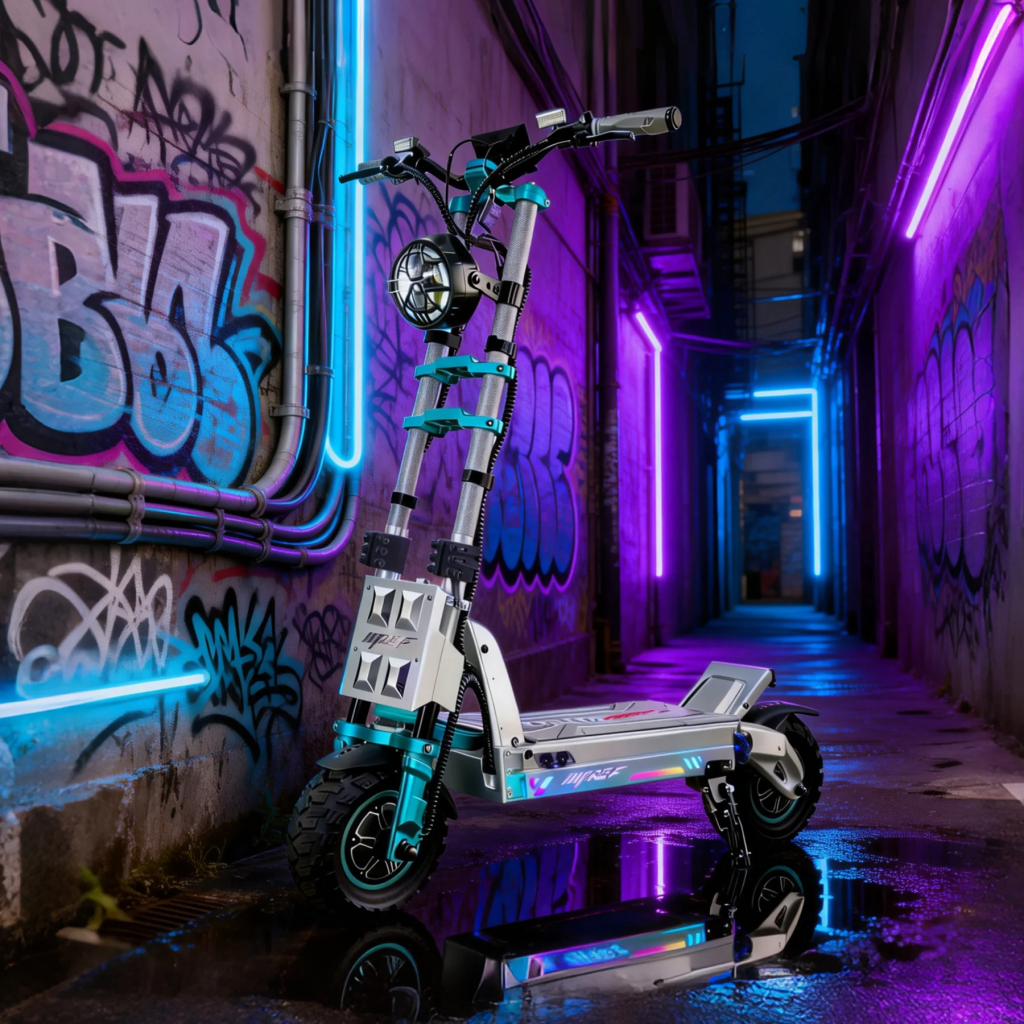
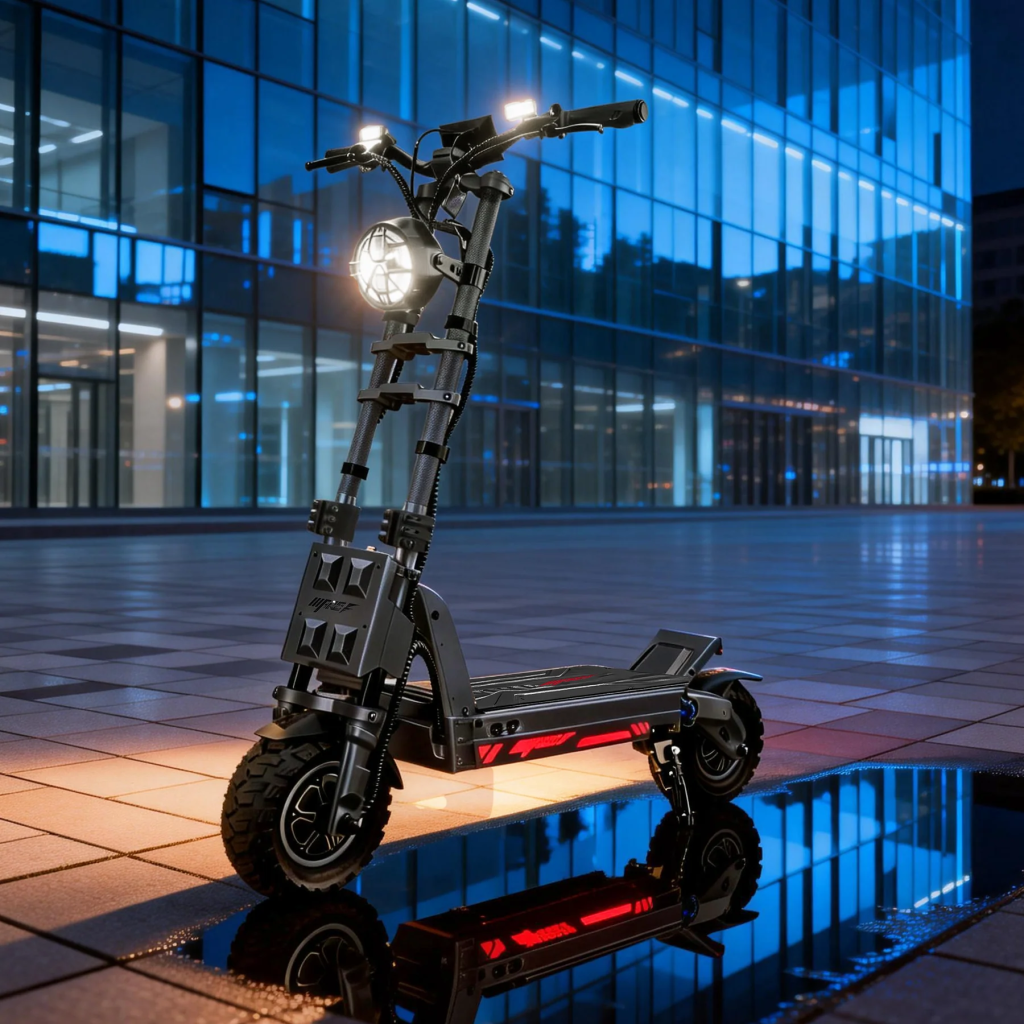
Shadow Knight goes in the opposite direction: deep, near-black tones with dark accent finishes that feel understated and aggressive at the same time. Where Azure Mecha is expressive, Shadow Knight is menacing in the best possible sense. It’s the choice for riders who want maximum presence with minimum noise. It’s the scooter equivalent of a blacked-out performance car.
The fact that GSPACE offers two distinct aesthetics on the GS 8440 reflects the diversity of its buyer: the POWER+ rider isn’t one type of person, and the colorway choice lets them communicate that through their machine.
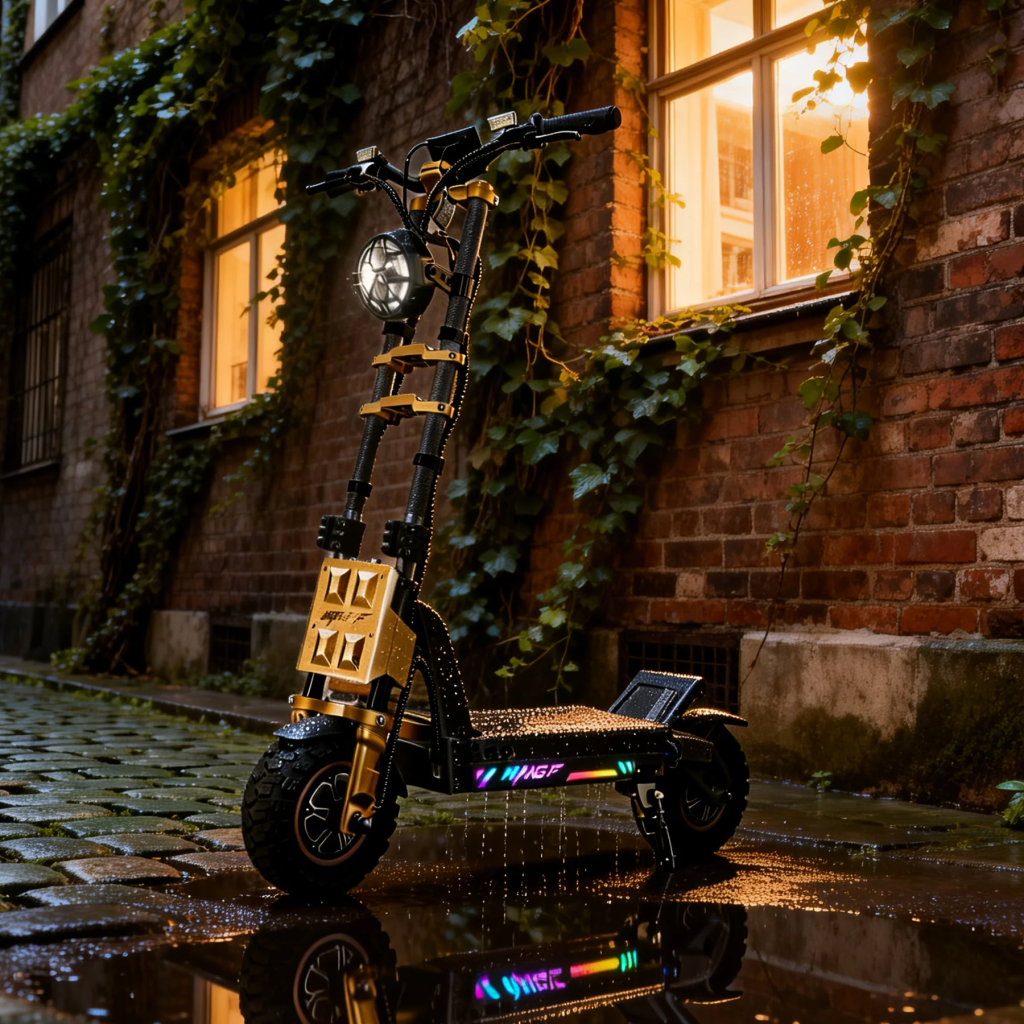
GS 7660: Vintage Titan
The RANGE+ model ships exclusively in Vintage Titan. It’s a single colorway, but a deliberate one.
Where the GS 8440’s options trend toward modern and aggressive, Vintage Titan brings warmth and character. The earthy, weathered tones reference the kind of rugged, long-distance traveler the GS 7660 was built to be. It’s a colorway that looks as good dusty on a touring road as it does clean in a city garage.
The single-colorway approach is also a statement of confidence. GSPACE isn’t hedging with the GS 7660’s identity. The Vintage Titan finish is intentional and coherent, a visual shorthand for a machine designed around endurance over flash.
Colorway Summary
| GS 8440 (POWER+) | GS 7660 (RANGE+) | |
|---|---|---|
| Available Colorways | Azure Mecha, Shadow Knight | Vintage Titan |
| Aesthetic Character | Futuristic / Aggressive | Rugged / Characterful |
| Choice Flexibility | Two options | Single signature finish |
If having a choice of finish matters to you, the GS 8440 gives you that flexibility. If you’re drawn to the GS 7660’s RANGE+ mission, the Vintage Titan finish is a strong identity in its own right, and honestly, it suits the scooter’s long-haul personality better than anything flashier would.
The Decision Framework
If your rides are shorter and more intense, urban commutes, performance runs, or technical riding, the GS 8440 earns its POWER+ designation without asterisks.
If you cover serious distance daily, ride in mixed conditions, or want the scooter that keeps going long after others need a charge, the GS 7660 is the more practical, more thoughtfully tuned machine for that mission.
Both scooters demonstrate what happens when a manufacturer actually invests in engineering rather than just stacking specifications onto a conventional platform.
The T300 carbon frame, the in-house FOC controller, the double wishbone suspension, and the passive safety architecture are not spec-sheet box-ticking. They’re coherent design decisions that make both machines feel different from anything else at this price point.
Neither is wrong. Choose based on what you actually do with a scooter, not what you imagine you might do with it.
Where to Buy
Both the GS 8440 and GS 7660 are available directly from GSPACE at gspace-tech.com.
Use the discount code ERC100 at checkout to save $100 on either model.
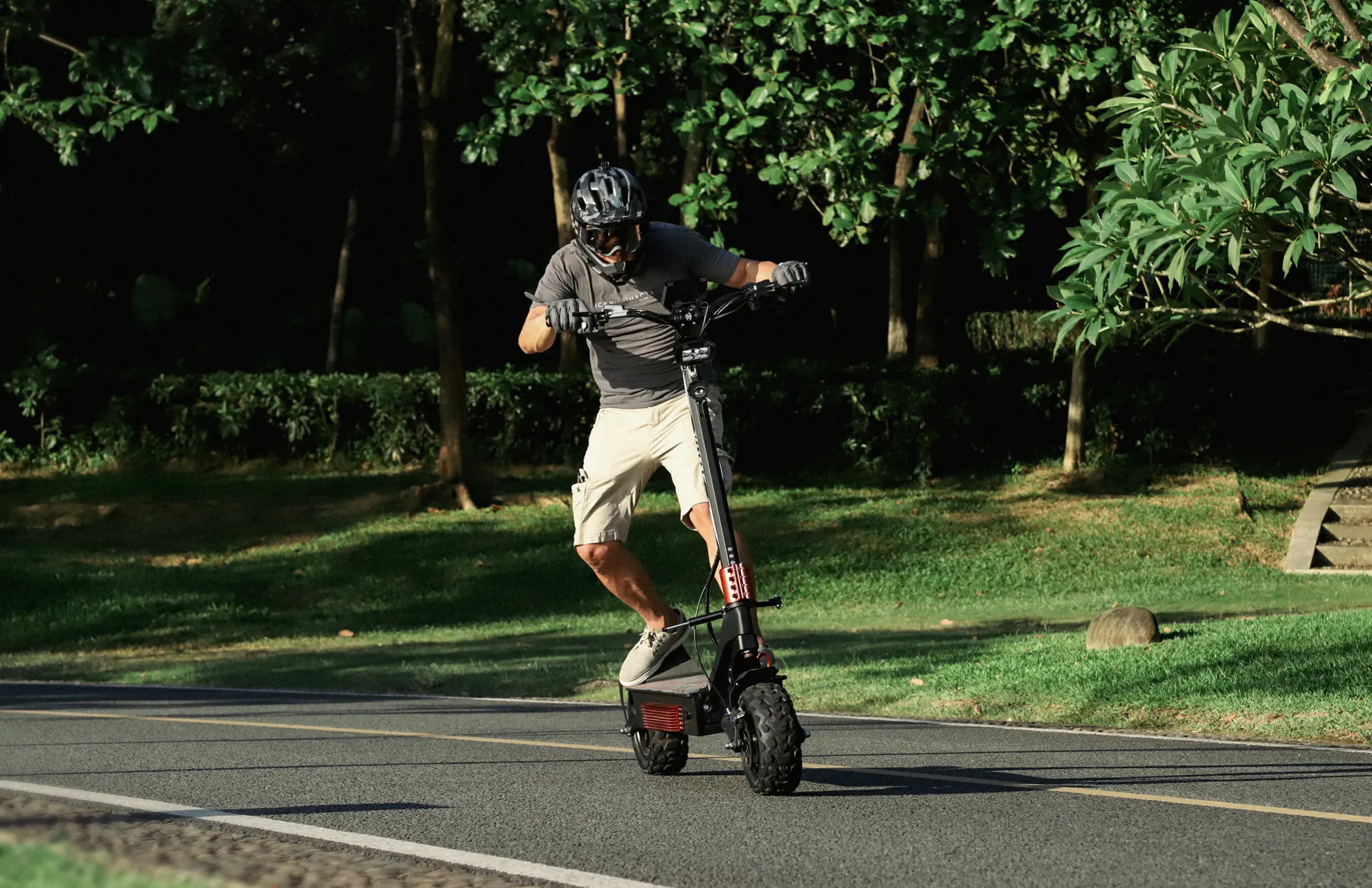
About the Author
Amos is the founder and lead writer at SaasMoment.com, a dedicated resource for electric scooter enthusiasts, commuters, and buyers seeking practical, real-world insights. With over 6 Years of hands-on experience riding, testing, and reviewing dozens of electric scooters across urban, suburban, and off-road conditions, Amos brings firsthand knowledge of performance, battery life, build quality, safety features, and everyday usability