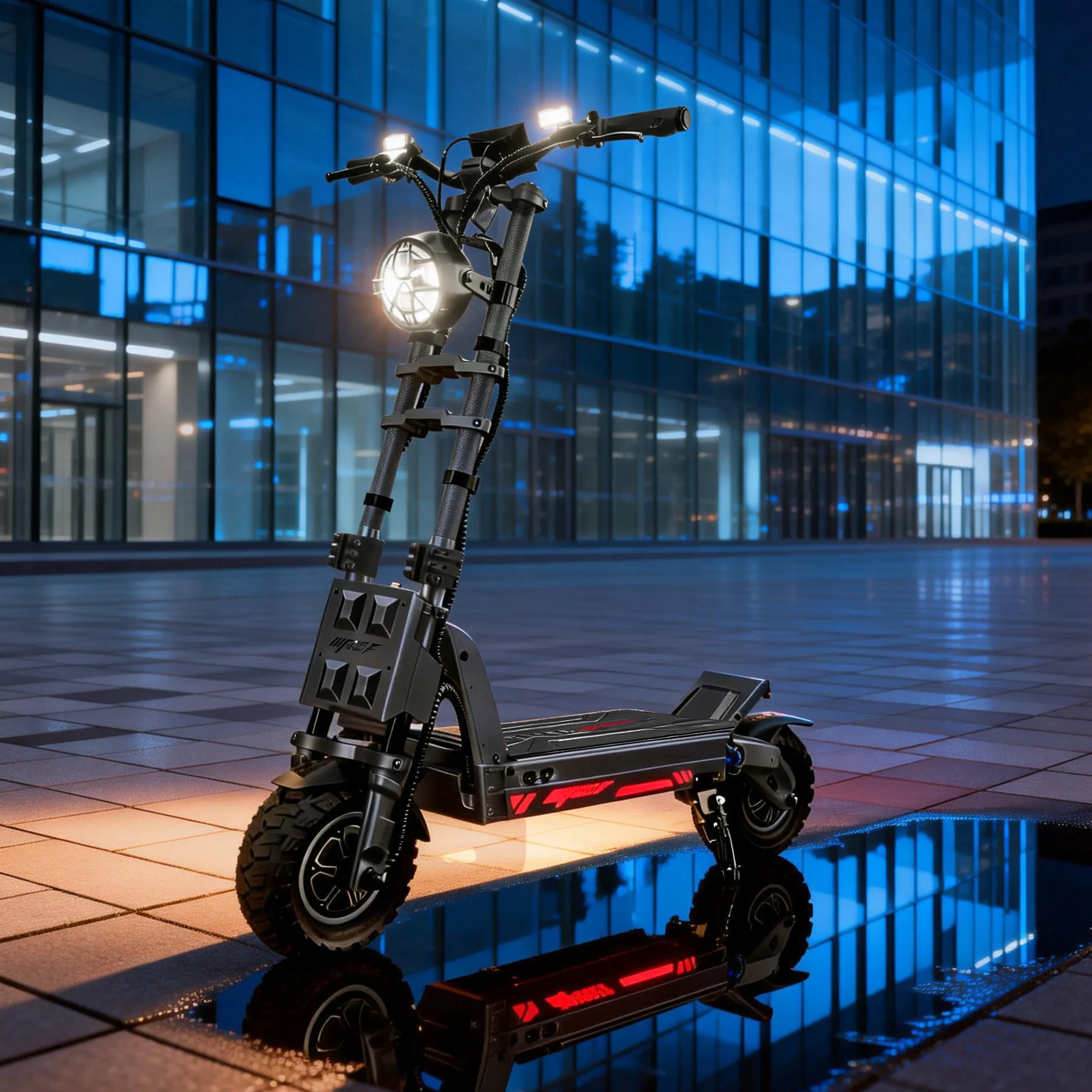
Finding a reliable electric scooter when you weigh 400 lbs is not as simple as picking the most popular model online.
Most consumer-grade scooters cap out at 220–265 lbs, leaving heavier riders with an unsafe, sluggish, or mechanically compromised ride.
This guide is built specifically for you: riders in the 400-440 lb range who need a scooter engineered to handle the extra load without sacrificing speed, range, or safety.
| ⚠️ Why Weight Capacity Matters Beyond the Spec Sheet A 440 lb max load rating doesn’t just mean ‘the deck won’t snap.’ It means the frame, motor, battery output, braking system, and suspension are all co-engineered to operate safely under that load. Riding a 265 lb scooter at 400 lbs puts every component under dangerous stress. Always ride within the rated limit — and ideally with at least 10% headroom above your body weight. |
Table of Contents
How We Evaluated These Scooters
Each scooter in this guide was selected based on the following criteria as they specifically apply to heavy riders:
- Max load rating of 400 lbs or higher (manufacturer-stated and independently verified)
- Motor power sufficient to maintain speed and hill-climb performance under heavy load
- Suspension system capable of absorbing road shock at high rider weight without bottoming out
- Braking system rated for the combined mass of rider and scooter
- Frame and deck construction using reinforced materials (aircraft-grade aluminum or steel-alloy)
- Battery capacity large enough to maintain real-world range under heavier load conditions
Note: Published range figures from manufacturers are tested at 25 km/h with a 75 kg (165 lb) rider. At 400 lbs, the real-world range will be 20–35% lower depending on terrain, riding mode, and incline. We flag this for each model below.
Quick Comparison: At a Glance
| Model | Motor | Range | Top Speed | Battery | Best For |
| GS7660 | 2×3000W | 137 mi | 70 mph | 76V 60Ah | Long Range |
| GS8440 | 2×3,500W | 112 mi | 76 mph | 84V 40Ah | Power & Speed |
| GT Hyper | 2×2,000W | 69 mi | 65 mph | 72V 33.8Ah | Best Value |
| ECO Hyper | 1×2,000W | 62 mi | 50 mph | 72V 26Ah | Budget Pick |
| 11 GTR | 2×2,000W | 105 mi | 69 mph | 72V 45Ah | All-Terrain |
1. GSpace Mars GS7660: Best for Long Range
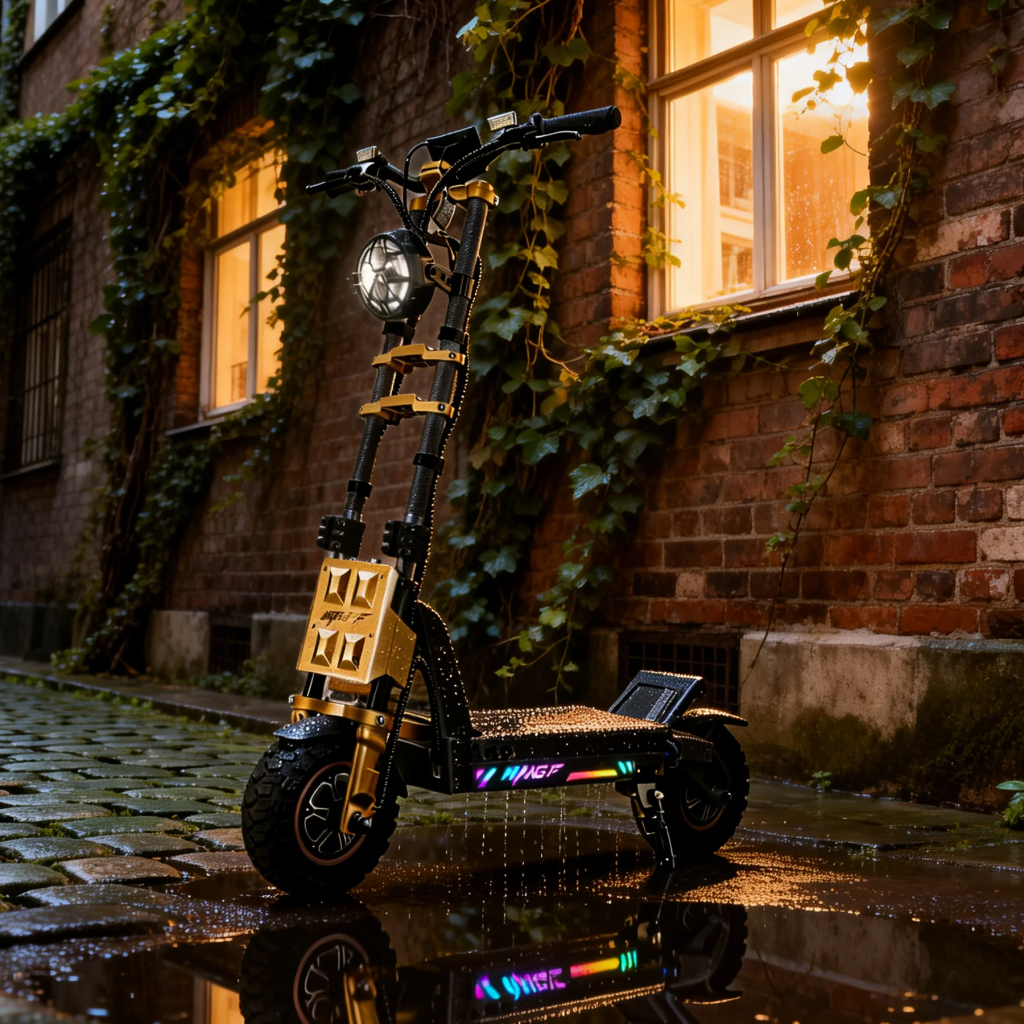
If you’re a heavier rider who needs serious distance between charges; whether for long commutes, touring, or simply not wanting to charge every day, the Mars GS7660 is your answer.
As GSPACE’s long-range flagship in the GS series, it pairs a massive 72V 60Ah battery with a quad-motor setup that doesn’t sacrifice power for efficiency.
Specs That Matter for 400 lb Riders
| Max Load | 440 lbs (200 kg) |
| Motor | 2 × 3000W (6,000W total rated; ~9,000W peak) |
| Top Speed | ~75 mph |
| Range | 137 miles (manufacturer-tested at 25 km/h, 75 kg load) |
| Battery | 76V 60Ah; largest in the Mars GS lineup |
| Suspension | A-A Double Wishbone + Multi-Link; Front Air Spring; Rear Oil-Gas Hydraulic |
| Brakes | Front & Rear 4-Piston Calipers + EABS Electronic Brake |
| Safety Systems | TCS Traction Control, Fault-Tolerant Motor Modes |
Why It Works for Heavy Riders
The GS7660’s 60Ah battery is the largest in the Mars series, and this directly benefits heavier riders.
Battery drain scales with rider weight. A 400 lb rider will consume meaningfully more power per mile than a 165 lb test rider.
With 60Ah on board, even after the real-world efficiency penalty at higher weight, you can realistically expect 85–100+ miles of range, making it the only scooter in this list that heavy riders can confidently ride without range anxiety on longer trips.
The dual-motor configuration is another key advantage: power is distributed across the two wheels rather than concentrated at one, reducing per-motor heat buildup and mechanical stress under sustained heavy-load riding.
GSPACE’s upgraded motor design features thickened magnetic steel sheets for 8.9% greater torque and optimized heat dissipation. Both are critical for maintaining performance when carrying a higher rider weight.
The fault-tolerant motor mode is a meaningful safety feature for heavier riders: if one motor fails mid-ride, the scooter remains operational rather than suffering a sudden loss of power or stopping unexpectedly.
| Real-World Range Expectation at 400 lbs The manufacturer’s range of 137 miles is tested at 165 lbs and 15 mph. At 400 lbs with mixed terrain, expect approximately 85–105 miles, as we reviewed it. Still the best range in this comparison by a wide margin. |
Who Should Buy the GS7660
- Long-distance commuters (20+ miles each way)
- Riders who don’t want to charge daily
- Heavy riders who have experienced premature battery drain on other scooters
2. Gspace Mars GS8440: Best for Power and Speed
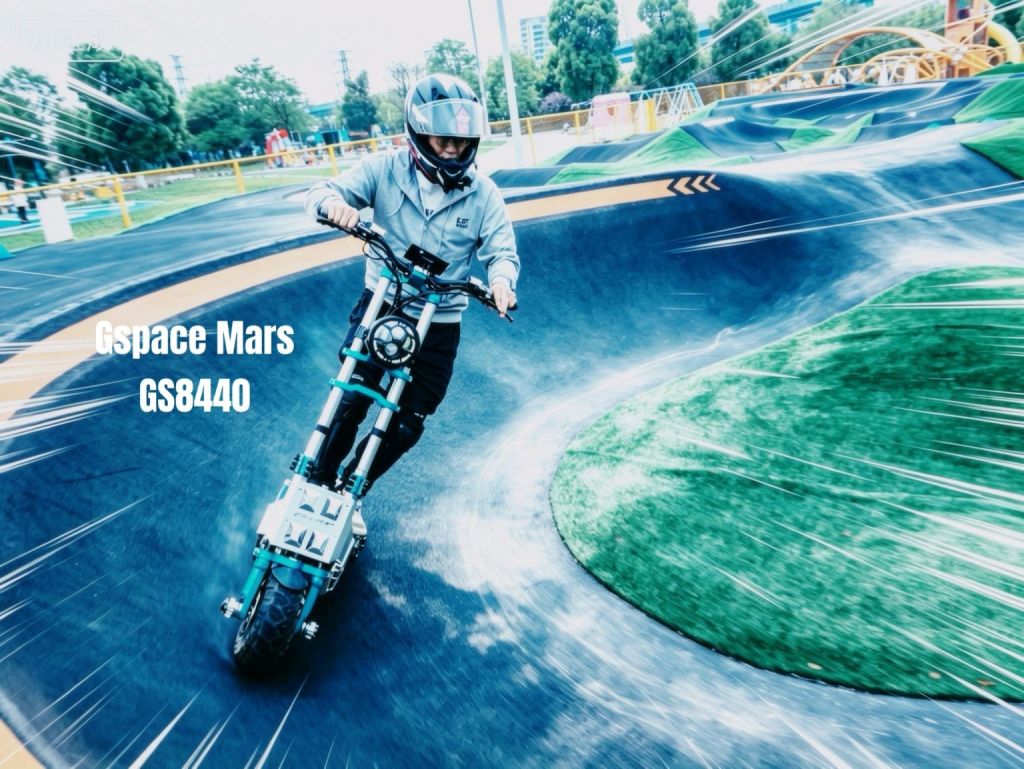
The Mars GS8440 is built for riders who refuse to let extra weight slow them down. With a combined rated motor output of up to 9,000W (with peak hitting higher), it is among the most powerful foldable electric scooters available in 2025–2026, and it is the top choice for anyone who wants performance — not just utility.
Specs That Matter for 400 lb Riders
| Max Load | 440 lbs (200 kg) |
| Motor | 2 × 3,500W (7,000W total rated; ~10,000W peak) |
| Top Speed | ~80 mph |
| Range | 112 miles (manufacturer-tested at 25 km/h, 75 kg load) |
| Battery | 84V 40Ah |
| Suspension | A-A Double Wishbone + Multi-Link; Front Air Spring; Rear Oil-Gas Hydraulic |
| Brakes | Front & Rear 4-Piston Calipers + EABS Electronic Brake |
| Safety Systems | TCS Traction Control, Fault-Tolerant Motor Modes |
Why It Works for Heavy Riders
The most fundamental problem heavier riders face on underpowered scooters is torque deficit.
On hills, on wet roads, or during acceleration, insufficient torque means the motor struggles, overheats, or simply stops performing safely. The GS8440 eliminates this problem entirely with dual 3,500W motors. Each motor alone rivals the total output of some competitor dual-motor setups.
At 400 lbs, maintaining highway-adjacent speeds and conquering steep inclines requires more motor headroom than lighter riders need.
The GS8440 provides that headroom. Even loaded to capacity, the scooter is not running near its performance ceiling. This means consistent acceleration, reliable hill performance, and motors that don’t overheat on sustained rides.
The upgraded motor design shared across the GS series [larger-diameter high-purity copper wiring, precision arc tile-shaped magnets, and enhanced heat dissipation] ensures that raw power is paired with durability.
GSPACE’s fault-tolerant motor mode also keeps the scooter operational if one motor encounters an issue, a critical safety consideration for high-speed riding at any weight.
| Speed & Weight: An Important Caution Top speeds of 70+ mph are physically dangerous at any weight. For heavy riders, stopping distances are longer due to greater momentum. Always use full protective gear and ensure the EABS electronic brake system is fully functional. Riding at moderate speeds maximizes both safety and range. |
Who Should Buy the GS8440
- Riders who have struggled with sluggish acceleration or hill performance on other scooters
- Performance-focused commuters on hilly terrain
- Experienced riders who want the absolute most power in a foldable form factor
3. Gspace Mars GT Hyper Scooter: Best-value
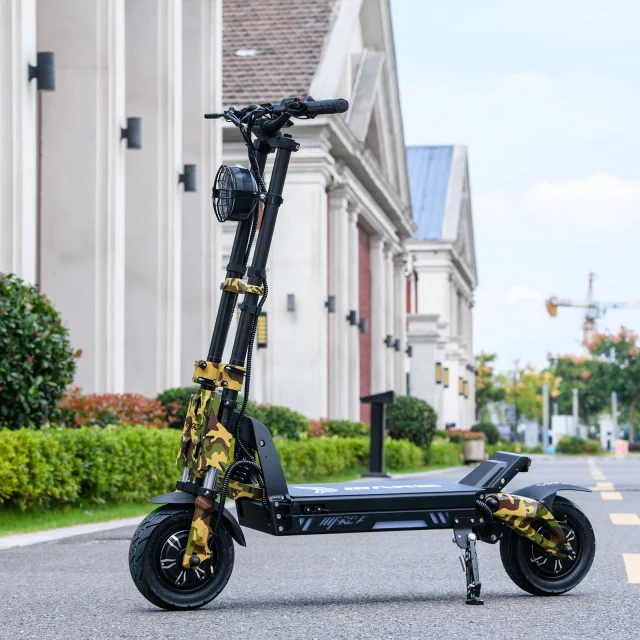
The Mars 11 GT Hyper is the sweet-spot pick in this lineup: dual 2,000W motors, a 440 lb load rating, capable suspension, and a price significantly lower than the GTR; without giving up the core capabilities that heavy riders need.
If budget matters and you don’t need maximum range or top-tier speed, the GT Hyper delivers 90% of the experience at a fraction of the cost.
Specs That Matter for 400 lb Riders
| Max Load | 440 lbs (200 kg) |
| Motor | 2 × 2,000W (4,000W total) |
| Top Speed | ~65 mph |
| Range | 69 miles (manufacturer-tested at 25 km/h, 75 kg load) |
| Battery | 72V 33.8Ah; DMEGC 18650 26E cells |
| Climbing Angle | 45° |
| Suspension | A-A Double Wishbone + Multi-Link independent suspension |
| Brakes | Hydraulic disc brakes + EABS |
| Charge Time | 6.5 hrs (6A) / faster with dual charging |
| Price | $2,899 |
Why It Works for Heavy Riders
The GT Hyper shares the same 440 lb max load rating and GSPACE’s A-A double wishbone suspension architecture with its more expensive siblings.
This isn’t a compromised budget version with a reduced frame. It’s the same structural engineering, with a smaller battery and slightly less peak motor output.
For heavy riders, this matters enormously. The suspension system is what keeps your ride stable and comfortable, especially on uneven surfaces.
At higher body weights, road vibration and instability are amplified. GSPACE’s multi-link independent suspension design minimizes body roll and sway, and the 45° climbing angle means moderate hills are well within reach even at maximum load.
The 4,000W dual-motor setup is more than sufficient for most urban and suburban riding scenarios. At 400 lbs, you won’t be setting drag-race records, but you will get confident, smooth acceleration and reliable performance without overworking the motors.
The 69-mile manufacturer range translates to approximately 40–55 miles at 400 lbs in real-world conditions, which is appropriate for daily commuting.
Who Should Buy the GT Hyper
- Daily commuters (15–30 mile round trips) who want proven heavy-rider capability without flagship pricing
- First-time high-capacity scooter buyers upgrading from an underpowered model
- Riders in hilly areas who need reliable climbing performance at heavier weights
4. Mars ECO Hyper Scooter: Best for Budget
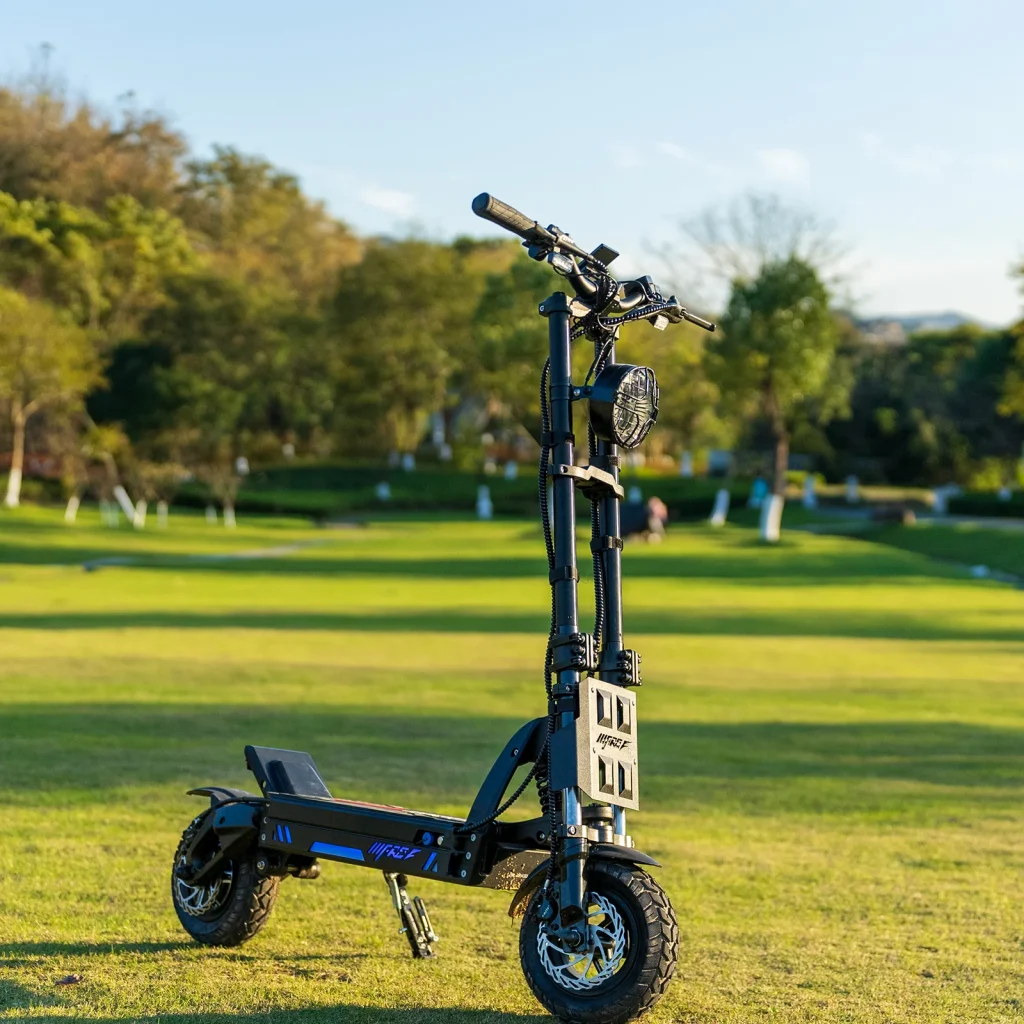
The Mars 11 ECO Hyper is the most affordable entry point into the GSPACE Mars lineup for heavy riders, and it punches significantly above its price class.
Despite being single-motor, independent testing clocked it as the fastest single-motor scooter ever tested, hitting a verified 45.3 mph. For a budget pick, that’s remarkable.
Specs That Matter for 400 lb Riders
| Max Load | 440 lbs (200 kg) |
| Motor | 1 × 2,000W rear (single motor) |
| Top Speed | ~50 mph claimed / 45.3 mph independently verified |
| Range | 62 miles (manufacturer-tested at 25 km/h, 75 kg load) |
| Battery | 72V 26Ah — DMEGC 18650 26E cells |
| Climbing Angle | 35° |
| Scooter Weight | ~115 lbs |
| Suspension | Full-size frame with serious suspension (A-A architecture) |
| Brakes | Dual Nutt hydraulic disc brakes |
| Price | $1,999 |
Why It Works for Heavy Riders
The ECO Hyper is an anomaly: a single-motor scooter built on the same full-size frame and suspension architecture as GSPACE’s dual-motor lineup, rated to the same 440 lb max load. Most budget single-motor scooters achieve lower price points by compromising on frame strength and load capacity. The ECO Hyper does not.
For heavy riders specifically, the frame and suspension matter as much as the motor. A reinforced chassis rated for 440 lbs, paired with GSPACE’s A-A suspension architecture, means the scooter will not flex dangerously, bottom out, or become unstable under your weight.
The single-motor limitation primarily affects climbing on very steep grades (35° max vs 45°+ on the dual-motor models) and sustained high-speed performance.
The 72V 26Ah battery, while smaller than the GTR’s, is still well-sized for daily urban commuting at heavier weights.
| Single-Motor Trade-off at 400 lbs The ECO Hyper’s 35° climbing angle (vs 45–50° for dual-motor models) means it will struggle more on steep hills under maximum load. If your commute involves significant elevation changes, step up to the GT Hyper. For flat to moderate terrain, the ECO Hyper handles 400 lb riders well. |
Who Should Buy the ECO Hyper
- Budget-conscious heavy riders who still need a legitimately heavy-duty scooter
- Riders on relatively flat terrain (urban/suburban, not mountainous routes)
- Those who want a proven GSPACE frame and suspension at the lowest entry price
5. Mars GTR: Best for All Terrains
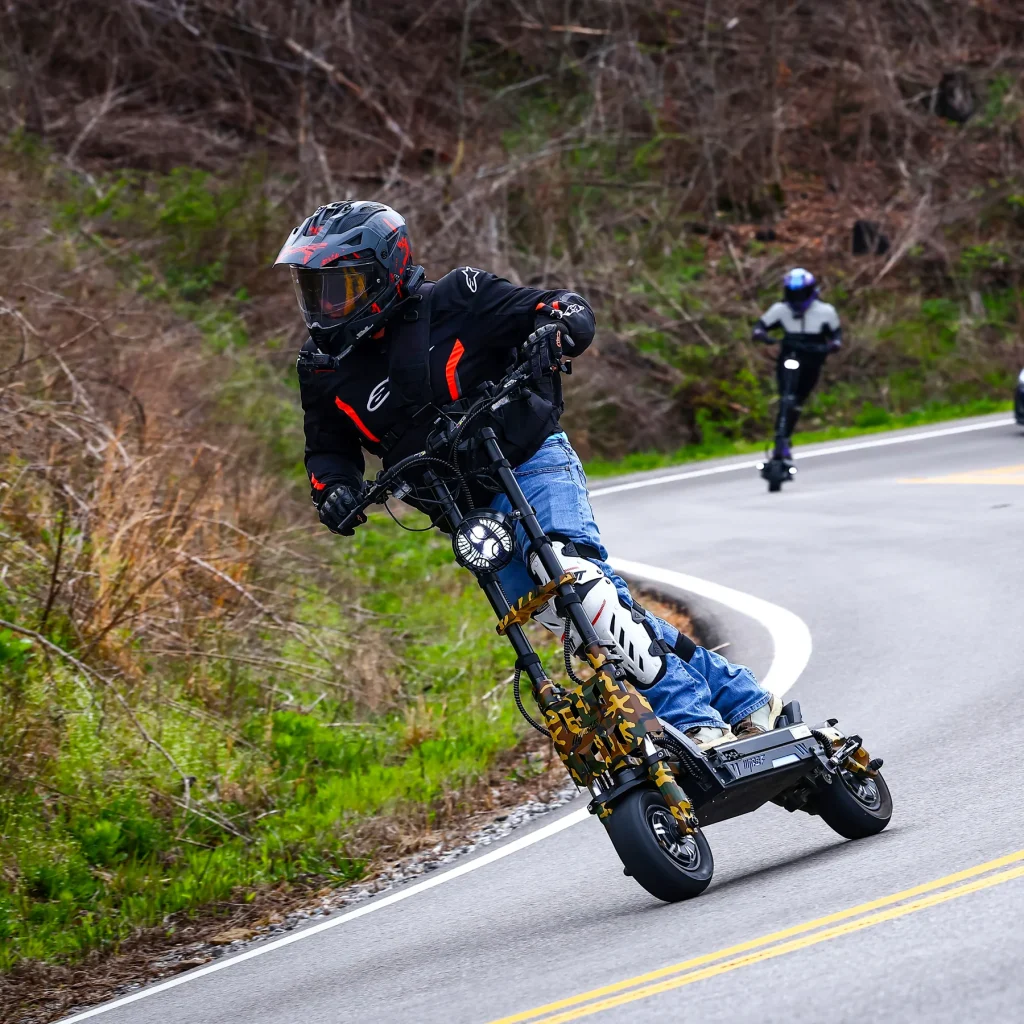
The Mars 11 GTR is GSPACE’s premium all-terrain flagship.
With a 440 lb load rating, dual 2,000W motors, a massive 72V 45Ah Samsung battery for 105 miles of range, and a double wishbone independent suspension system paired with IP66 waterproofing, it is built for riders who venture beyond smooth pavement and who need a scooter that handles rough terrain predictably and safely at high rider weight.
Specs That Matter for 400 lb Riders
| Max Load | 440 lbs (200 kg) |
| Motor | 2 × 2,000W (4,000W total) |
| Top Speed | 69 mph |
| Range | 105 miles (manufacturer-tested at 25 km/h, 75 kg load) |
| Battery | 72V 45Ah; Samsung 21700 cells (30% higher energy density) |
| Climbing Angle | 50° — highest in this lineup |
| Suspension | Double Wishbone Independent (front) + Multi-Link Independent (rear) |
| Waterproofing | IP66 rated |
| Brakes | EABS hydraulic disc brakes (front and rear) with energy recovery |
| Charge Time | 7 hrs (6A) / 6.5 hrs (dual 6A+2A charging) |
| Price | $3,399 |
Why It Works for Heavy Riders
The GTR’s most important engineering advantage for heavy riders is its suspension system.
The double wishbone independent front suspension provides high structural rigidity that prevents fork twisting, which is a real concern when heavier riders hit bumps or potholes at speed. By separating steering and shock absorption into distinct mechanisms, the design eliminates interference between the two, delivering precise handling even over rough surfaces.
The 50° climbing angle is the highest in this lineup and makes the GTR the only choice for riders who regularly encounter steep hills.
At 400 lbs, motor torque requirements on steep inclines increase dramatically. The GTR’s dual 2,000W motors with this angular capability give heavier riders the confidence to tackle grades that would stall or overheat lesser scooters.
Samsung 21700 battery cells deliver 30% higher energy density than standard 18650 cells, which is why the GTR achieves 105 miles from a 45Ah pack. This matches or exceeds some competitors’ larger-capacity packs.
The IP66 waterproofing rating means the electronics are protected from heavy rain and water jets, a significant advantage for riders in wet climates or off-road use.
The EABS hydraulic disc brakes include energy recovery, extending real-world range while providing the stopping force necessary for the combined weight of a 400 lb rider and a 100+ lb scooter.
| Off-Road Riding at 400 lbs: What to Expect The GTR’s independent suspension dramatically improves stability on uneven terrain for heavier riders. However, all published specs (range, speed, climbing angle) are tested at 75 kg. At 400 lbs, the real-world range will be 65–85 miles on mixed terrain, and extreme off-road conditions will reduce this further. Always assess trail conditions and charge before long rides. |
Who Should Buy the GTR
- Riders who regularly travel on unpaved roads, gravel, or rough urban surfaces
- Commuters in hilly areas (a 50° climb angle is essential for steep grades)
- Riders in wet climates who need IP66 waterproofing
- Anyone who wants the best all-round heavy-rider scooter and can invest at the premium price point
Also Read: Gspace Mars GS8440 VS GS7660 Comparisons
What Heavy Riders Need to Know Before Buying
Always Verify the Max Load Rating
The weight limit on an electric scooter is not just a safety suggestion. It is an engineering specification.
Operating above the rated limit stresses the motor controller, frame welds, battery management system, and braking components.
Even at rated capacity, you should factor in the weight of any cargo, backpack, or accessories you carry, as these count toward the total load.
Motor Power Under Load
A 400 lb rider requires substantially more motor torque than a 165 lb rider to maintain speed on inclines and during acceleration.
General guidance: look for a minimum of 2,000W total motor output for flat terrain, and 4,000W+ for hilly routes. All five scooters in this guide meet or exceed these thresholds.
Suspension Quality
Road vibration and instability are amplified at higher rider weight. A scooter with poor suspension that feels slightly rough for a lighter rider can feel dangerously unstable for a 400 lb rider.
GSPACE’s A-A double wishbone architecture specifically addresses this by minimizing fork twist and separating steering from shock absorption.
Braking Distance
The stopping distance of a 400 lb rider on a 100+ lb scooter is considerably longer than for a lighter setup.
Hydraulic disc brakes with EABS electronic braking are the minimum requirement at these weights. Avoid mechanical disc brakes or drum brakes, which lack the consistent stopping power needed for heavy-load riding.
Battery and Real-World Range
Manufacturers test range with a ~165 lb rider at 15 mph on flat ground. At 400 lbs, expect 25–35% reduction in real-world range. Use this as your planning baseline, not the spec-sheet number. For daily use, always charge to full between rides and carry a spare charging cable for longer excursions.
Frame and Deck Construction
The GSPACE Mars series uses aircraft-grade aluminum alloy frames throughout, purpose-built to handle the stress of repeated heavy-load use. Avoid scooters with plastic deck sections or thin aluminum that was not rated for riders above 265 lbs — these will show stress fractures, flex uncomfortably, and ultimately fail faster under heavy use.
Final Verdict
| Scooter | Best For | Our Take |
| GS7660 | Long Range | Best choice for distance riders who need maximum range despite heavier weight. |
| GS8440 | Power & Speed | The ultimate performance pick: 7,000W motors leave no power deficit for 400 lb riders. |
| GT Hyper | Best Value | Full 440 lb rating at $2,899: serious capability without flagship pricing. |
| ECO Hyper | Budget | Strongest budget-class option for heavy riders; ideal for flat terrain commuting. |
| GTR | All-Terrain | Best all-rounder; premium suspension, 50° climbing, IP66, and 105-mile range. |
About the Author
Amos is the founder and lead writer at SaasMoment.com, a dedicated resource for electric scooter enthusiasts, commuters, and buyers seeking practical, real-world insights. With over 6 Years of hands-on experience riding, testing, and reviewing dozens of electric scooters across urban, suburban, and off-road conditions, Amos brings firsthand knowledge of performance, battery life, build quality, safety features, and everyday usability